
Abstract
Objective
The survival advantage of triplet versus doublet chemotherapy regimens and cisplatin versus oxaliplatin-based therapies for first-line treatment in human epidermal growth factor receptor 2 (HER2)-negative metastatic gastric cancer remains unclear. This study aimed to evaluate and compare the impact of these regimens on survival and safety.
Material and Methods
This retrospective, single-centre analysis included 259 patients with HER2-negative metastatic gastric cancer treated between 2012 and 2021. Progression-free survival (PFS), overall survival (OS), and toxicity profiles were evaluated as primary outcomes. Multivariate Cox regression and subgroup analyses were conducted to identify significant prognostic factors and patient subsets benefitting most from specific treatments.
Results
Median PFS and OS were not significantly different between triplet (n=188) and doublet (n=71) groups (PFS: 6.77 vs. 4.90 months; OS: 11.02 vs. 9.43 months; p>0.05 for both). Similarly, no significant differences were observed between oxaliplatin-based (n=59) and cisplatin-based (n=203) regimens (PFS: 6.15 vs. 6.33 months; OS: 11.8 vs. 10.5 months; p>0.05). Multivariate analysis demonstrated that oxaliplatin significantly reduced progression risk [hazard ratio (HR): 0.68, p=0.025] without a significant OS benefit. Triplet therapy had no significant impact on PFS or OS. Subgroup analyses showed OS benefits with triplet therapy in patients with poor differentiation/signet-ring cell histology (HR: 0.53, p=0.005), lymph node metastasis (HR: 0.67, p=0.045), and peritoneal metastasis (HR: 0.58, p=0.061). Oxaliplatin-based therapy particularly benefited patients, aged ≥65 years, with comorbidities, middle gastric tumours, or ≤2 metastatic sites.
Conclusion
No general survival advantage was observed between the regimens, but specific subgroups appeared to benefit, warranting further investigation.
Keywords: Adenocarcinoma, cancer diagnosis and treatments, medical oncology
INTRODUCTION
Gastric cancer is the fifth most common cancer worldwide and occurs more frequently in men. Although surgical resection is the only curative treatment option, approximately 40% of patients present with metastatic disease at diagnosis; among those who undergo surgery, 30% experience relapse. Untreated metastatic gastric cancer has a 5-year survival rate of approximately 5%. In metastatic gastric cancer, palliative chemotherapy remains the cornerstone of treatment, with combination regimens being the most frequently used. Following the TOGA study, adding trastuzumab to combination chemotherapy for human epidermal growth factor receptor 2 (HER2)-positive disease became the standard of care. Additionally, combining anti-programmed cell death 1 therapy with chemotherapy in patients whose tumours have high programmed death-ligand 1 levels or are microsatellite instability-high has been shown to prolong survival. Despite the advent of targeted therapies, a substantial number of patients lack relevant biomarkers or fail to benefit from these agents, leaving systemic chemotherapy as their sole treatment option, with a median overall survival (OS) of around 12 months.,
It is well-established that chemotherapy improves both survival and quality of life compared to best supportive care in metastatic gastric cancer. Anthracyclines, fluoropyrimidines, taxanes, irinotecan, and platinum-based drugs form the mainstay of treatment. These agents are administered as monotherapy or in various combinations, which are referred to as doublet or triplet regimens. Previous studies have demonstrated that combination therapy generally provides a survival advantage over monotherapy; and some findings suggest that triplet regimens may offer further improvements over doublets. For example, Wagner et al. reported a survival benefit when an anthracycline was added to a cisplatin-5-fluorouracil (5-FU) regimen, and the V-325 trial showed that adding docetaxel to cisplatin-5-FU prolonged survival, albeit with higher toxicity. However, Yamada et al. found that adding docetaxel to cisplatin and S1 did not improve OS compared to cisplatin and S1 alone. Ethnic differences -such as earlier diagnosis and a higher incidence of the intestinal subtype in Asian populations, along with possible genetic factors- may contribute to these inconsistent findings. In fact, some research suggests that the survival benefit of triplet regimens is greater in Western populations than in Asian populations. Further, previous studies suggest that metastatic patterns and histological tumour characteristics might impact treatment efficacy. Consequently, the net effect of triplet therapy on the overall patient population remains unclear, although evidence indicates some subgroups may derive benefit., Given the limited survival advantage and increased toxicity of triplet regimens, current guidelines recommend a fluoropyrimidine-platinum doublet as the standard first-line therapy. Nevertheless, taxane-based triplet therapy may be appropriate for well-selected, fit patients likely to tolerate and benefit from more intensive treatment.,
In recent years, oxaliplatin has been increasingly adopted because it is considered non-inferior to cisplatin in efficacy and is often less toxic., Cisplatin is associated with higher rates of haematologic toxicity and renal impairment, whereas oxaliplatin more frequently causes peripheral neuropathy. Some meta-analyses even suggest that oxaliplatin might be more effective than cisplatin. Given these conflicting data, additional studies in different ethnic groups are warranted, and subgroup analyses may help identify which patients benefit most from specific approaches. Therefore, this study aimed to evaluate the effects of doublet versus triplet chemotherapy regimens and the choice of platinum agent on survival and toxicity outcomes in Turkish patients with HER2-negative metastatic gastric cancer, while also performing subgroup analyses to refine treatment strategies.
MATERIAL AND METHODS
This single-centre, retrospective study included patients diagnosed with metastatic gastric adenocarcinoma who received first-line chemotherapy between 2012 and 2021. Data were obtained from electronic medical records and archived files. The study adhered to good clinical practice guidelines and complied with the ethical principles outlined in the Declaration of Helsinki. Ethical approval for the study was granted by the Institutional Ethical Review Board of Ege University Hospital (approval no. 25-3.1T/61, date: 20.03.2025). Patients with HER2-negative (immunohistochemistry 0, 1+, or 2+/fluorescence in situ hybridization-negative) metastatic gastric adenocarcinoma who received first-line chemotherapy were included. Patients were excluded if they had single-agent chemotherapy, anthracycline-based therapy, HER2-positive tumours, active secondary malignancies, insufficient follow-up data, or had undergone hyperthermic intraperitoneal chemoperfusion due to isolated peritoneal metastasis.
Collected data included demographic characteristics, Eastern Cooperative Oncology Group (ECOG) performance status, comorbid conditions, metastatic sites, tumour localization and histological characteristics, chemotherapy regimens administered, chemotherapy-related haematological toxicities, and treatment delays. Progression-free survival (PFS) was defined as the time from metastatic diagnosis until disease progression or death, and OS was defined as the time from metastatic diagnosis until death. Patients alive at the end of the study period were censored at their last clinical follow-up date. Toxicity grading was performed according to Common Terminology Criteria for Adverse Events version 5.0.
The chemotherapy regimens were as follows: modified 5-fluorouracil, oxaliplatin (mFOLFOX)-6: 85 mg/m² oxaliplatin, 400 mg/m² leucovorin (LV), and 400 mg/m² bolus 5-FU, followed by a 46-hour continuous infusion of 2400 mg/m² 5-FU every 2 weeks, capecitabine and oxaliplatin (CAPOX): 130 mg/m² oxaliplatin on day 1 and 1000 mg/m² capecitabine orally twice daily for 14 days, repeated every 3 weeks, Cisplatin-5-FU: 75 mg/m² cisplatin, followed by a 46-hour continuous infusion of 2600 mg/m² 5-FU, repeated every 3 weeks, cisplatin-docetaxel: 75 mg/m² cisplatin and 75 mg/m² docetaxel every 3 weeks, modified docetaxel, cisplatin, and fluorouracil (mDCF): 40 mg/m² cisplatin, 40 mg/m² docetaxel, 400 mg/m² LV, and 400 mg/m² bolus 5-FU on day 1, followed by a 46-hour continuous infusion of 2000 mg/m² 5-FU every 2 weeks, standard DCF/X: 75 mg/m² cisplatin and 75 mg/m² docetaxel on day 1, 400 mg/m² LV, and 400 mg/m² bolus 5-FU, followed by a 46-hour continuous infusion of 2400 mg/m² 5-FU (or 1000 mg/m² capecitabine orally twice daily for 14 days) every 3 weeks, FLOT: 85 mg/m² oxaliplatin, 50 mg/m² docetaxel, and 200 mg/m² LV on day 1, followed by a 24-hour continuous infusion of 2600 mg/m² 5-FU, repeated every 2 weeks.
Statistical Analysis
Categorical variables were summarised as numbers and percentages, and continuous variables were presented as medians (range). Categorical variables were compared using the chi-square test, whereas continuous variables were compared using the Mann-Whitney U test. Survival was analysed using the Kaplan-Meier method, with differences assessed by the log-rank test. Univariable and multivariable Cox regression analyses were performed to identify predictive factors for PFS and OS. All statistical analyses were carried out using R version 4.4.2 and Jamovi software. A p-value <0.05 was considered statistically significant.
RESULTS
Patient Characteristics
A total of 259 patients with HER2-negative metastatic gastric cancer who received chemotherapy between 2012 and 2021 were included. Baseline characteristics of the entire cohort and comparisons according to treatment regimen are shown in .
TABLE 1. Baseline demographic, clinical, and tumor characteristics by treatment regimen and platinum agent.
- | - | Total (n=259) | Triplet regimen (n=188) | Doublet regimen (n=71) | p | Cisplatin-based regimen (n=203) | Oxaliplatin-based regimen (n=56) | p |
|---|---|---|---|---|---|---|---|---|
Age, years | Median (IQR) | 61.0 (53.0, 68.0) | 59.0 (50.0, 65.0) | 66.0 (58.0, 74.0) | <0.001 | 61.0 (52.5, 67.0) | 62.0 (53.8, 70.2) | 0.473 |
Sex | Male | 178 (68.7) | 132 (70.2) | 46 (64.8) | 0.490 | 142 (70.0) | 36 (64.3) | 0.518 |
Female | 81 (31.3) | 56 (29.8) | 25 (35.2) | 61 (30.0) | 20 (35.7) | |||
Comorbidity | Yes | 90 (34.7) | 57 (30.3) | 33 (46.5) | 0.022 | 135 (66.5) | 34 (60.7) | 0.518 |
No | 169 (65.3) | 131 (69.7) | 38 (53.5) | 68 (33.5) | 22 (39.3) | |||
ECOG PS | 0-1 | 227 (87.6) | 171 (91.0) | 56 (78.9) | 0.015 | 179 (88.2) | 48 (85.7) | 0.790 |
≥2 | 32 (12.4) | 17 (9.0) | 15 (21.1) | 24 (11.8) | 8 (14.3) | |||
Localization | Upper | 79 (30.5) | 64 (34.0) | 15 (21.1) | 0.223 | 62 (30.5) | 17 (30.4) | 0.970 |
Middle | 69 (26.6) | 46 (24.5) | 23 (32.4) | 55 (27.1) | 14 (25.0) | |||
Lower | 86 (33.2) | 60 (31.9) | 26 (36.6) | 66 (32.5) | 20 (35.7) | |||
Linitis plastica | 25 (9.7) | 18 (9.6) | 7 (9.9) | 20 (9.9) | 5 (8.9) | |||
Differentiation | Well | 28 (10.8) | 22 (11.7) | 6 (8.5) | 0.678 | 25 (12.3) | 3 (5.4) | 0.287 |
Moderate | 49 (18.9) | 34 (18.1) | 15 (21.1) | 37 (18.2) | 12 (21.4) | |||
Poor | 86 (33.2) | 65 (34.6) | 21 (29.6) | 70 (34.5) | 16 (28.6) | |||
Signet-ring cell | 96 (37.1) | 67 (35.6) | 29 (40.8) | 71 (35.0) | 25 (44.6) | |||
Liver metastasis | No | 143 (55.2) | 108 (57.4) | 35 (49.3) | 0.300 | 108 (53.2) | 35 (62.5) | 0.277 |
Yes | 116 (44.8) | 80 (42.6) | 36 (50.7) | 95 (46.8) | 21 (37.5) | |||
Lung metastasis | No | 207 (79.9) | 150 (79.8) | 57 (80.3) | 1.000 | 162 (79.8) | 45 (80.4) | 1.000 |
Yes | 52 (20.1) | 38 (20.2) | 14 (19.7) | 41 (20.2) | 11 (19.6) | |||
Lymph node metastasis | No | 52 (20.1) | 40 (21.3) | 12 (16.9) | 0.542 | 43 (21.2) | 9 (16.1) | 0.511 |
Yes | 207 (79.9) | 148 (78.7) | 59 (83.1) | 160 (78.8) | 47 (83.9) | |||
Peritoneal metastasis | No | 128 (49.4) | 86 (45.7) | 42 (59.2) | 0.074 | 101 (49.8) | 27 (48.2) | 0.958 |
Yes | 131 (50.6) | 102 (54.3) | 29 (40.8) | 102 (50.2) | 29 (51.8) | |||
Bone metastasis | No | 217 (83.) | 156 (83.0) | 61 (85.9) | 0.702 | 170 (83.7) | 47 (83.9) | 1.000 |
Yes | 42 (16.2) | 32 (17.0) | 10 (14.1) | 33 (16.3) | 9 (16.1) | |||
Metastatic sites number | ≤2 | 173 (66.8) | 124 (66.3) | 49 (68.1) | 0.905 | 131 (64.5) | 42 (75.0) | 0.189 |
>2 | 86 (33.2) | 63 (33.7) | 23 (31.9) | 72 (35.5) | 14 (25.0) | |||
Toxicity | - | - | - | - | - | - | - | - |
Anemia | - | 35 (13.5) | 28 (14.9) | 7 (9.9) | 0.393 | 30 (14.8) | 5 (8.9) | 0.361 |
Thrombocytopenia | - | 12 (4.6) | 9 (4.8) | 3 (4.2) | 1.000 | 10 (4.9) | 2 (3.6) | 0.946 |
Neutropenia | - | 87 (33.6) | 66 (35.1) | 21 (29.6) | 0.408 | 72 (35.5) | 15 (26.8) | 0.290 |
Febrile neutropenia | - | 16 (6.2) | 13 (6.9) | 3 (4.2) | 0.608 | 14 (6.9) | 2 (3.6) | 0.547 |
Treatment delay | - | 114 (44.0) | 86 (45.7) | 28 (39.4) | 0.440 | 92 (45.3) | 22 (39.3) | 0.514 |
Second line treatment | No | 155 (59.8) | 107 (57.2) | 48 (66.7) | 0.212 | 116 (57.1) | 39 (69.6) | 0.125 |
Yes | 104 (40.2) | 80 (42.8) | 24 (33.3) | 87 (42.9) | 17 (30.4) |
Data are presented as n (%) or median (interquartile range, IQR). ECOG PS: Eastern Cooperative Oncology Group Performance Status; IQR: Interquartile range.
The median age was 61.0 years (range: 53.0-68.0), and 68.7% were male. Comorbidities were present in 34.7% of the patients, and 12.4% had an ECOG performance status of ≥2. A triplet regimen was administered to 188 patients (72.6%), whereas 71 patients (27.4%) received a doublet regimen. Cisplatin-based treatments were given to 203 patients (78.4%) and oxaliplatin-based treatments were given to 56 patients (21.6%). Comorbidities (46.5% vs. 30.3%; p=0.022) and ECOG PS ≥2 (21.1% vs. 9.0%; p=0.015) were significantly more common in the doublet group than in the triplet group. No significant differences were found regarding other baseline characteristics, haematologic toxicity, or treatment delays (p>0.05 for all). Details of treatment regimens are presented in .
TABLE 2. Distribution of chemotherapy regimens and toxicity outcomes.
Toxicity | FOLFOX/CAPOX (n=29) | Cisplatin-5-FU (n=32) | Cisplatin-docetaxel (n=10) | mDCF (n=119) | DCF/X (n=42) | FLOT (n=27) |
|---|---|---|---|---|---|---|
Anemia | 2 (6.9) | 3 (9.4) | 2 (20) | 17 (14.3) | 8 (19.1) | 3 (11.1) |
Thrombocytopenia | 1 (3.4) | 1 (3.1) | 1 (10) | 4 (3.4) | 4 (9.5) | 1 (3.7) |
Neutropenia | 7 (24.1) | 10 (31.3) | 4 (40) | 40 (33.6) | 18 (42.9) | 8 (29.6) |
Febrile neutropenia | 0 (0) | 2 (6.1) | 1 (10) | 8 (6.7) | 3 (7.1) | 2 (7.4) |
Treatment delay | 11 (37.9) | 13 (40.6) | 4 (40) | 53 (44.5) | 22 (52.4) | 11 (40.7) |
Data are presented as n (%); 5-Fu: 5-fluorouracil; mDCF: Modified docetaxel, cisplatin, and fluorouracil; FOLFOX: 5-fluorouracil, oxaliplatin; CAPOX: Capecitabine and oxaliplatin.
Survival Analysis
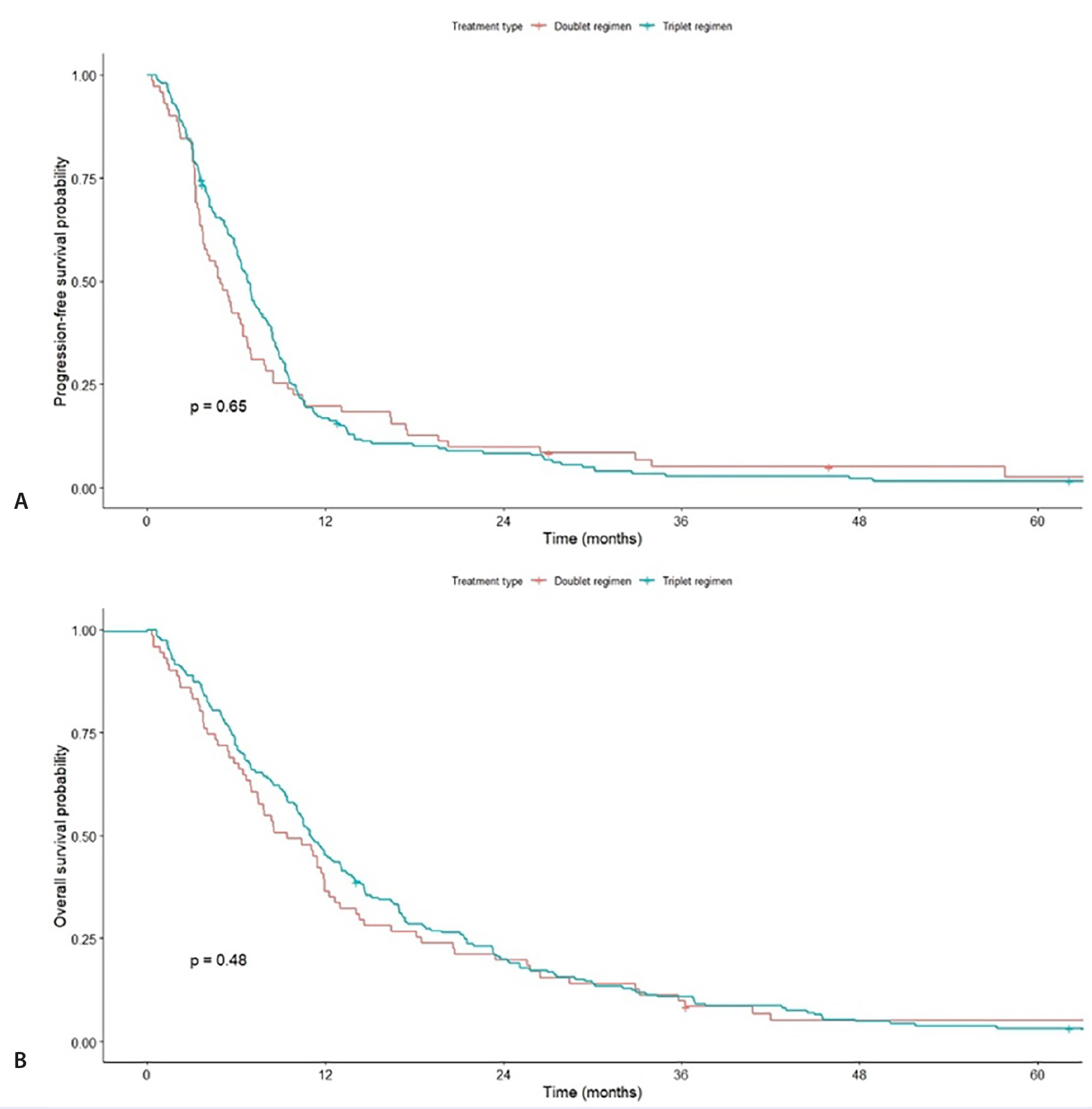
The median PFS for the entire cohort was 6.33 months [95% confidence interval (CI): 5.70-6.97], and the median OS was 11.0 months (95% CI: 9.47-12.0). Patients receiving the triplet regimen had a median PFS of 6.77 months (95% CI: 6.10-7.63) and median OS of 11.02 months (95% CI: 10.07-13.10) ().
PFS: Progression-free survival; OS: Overall survival
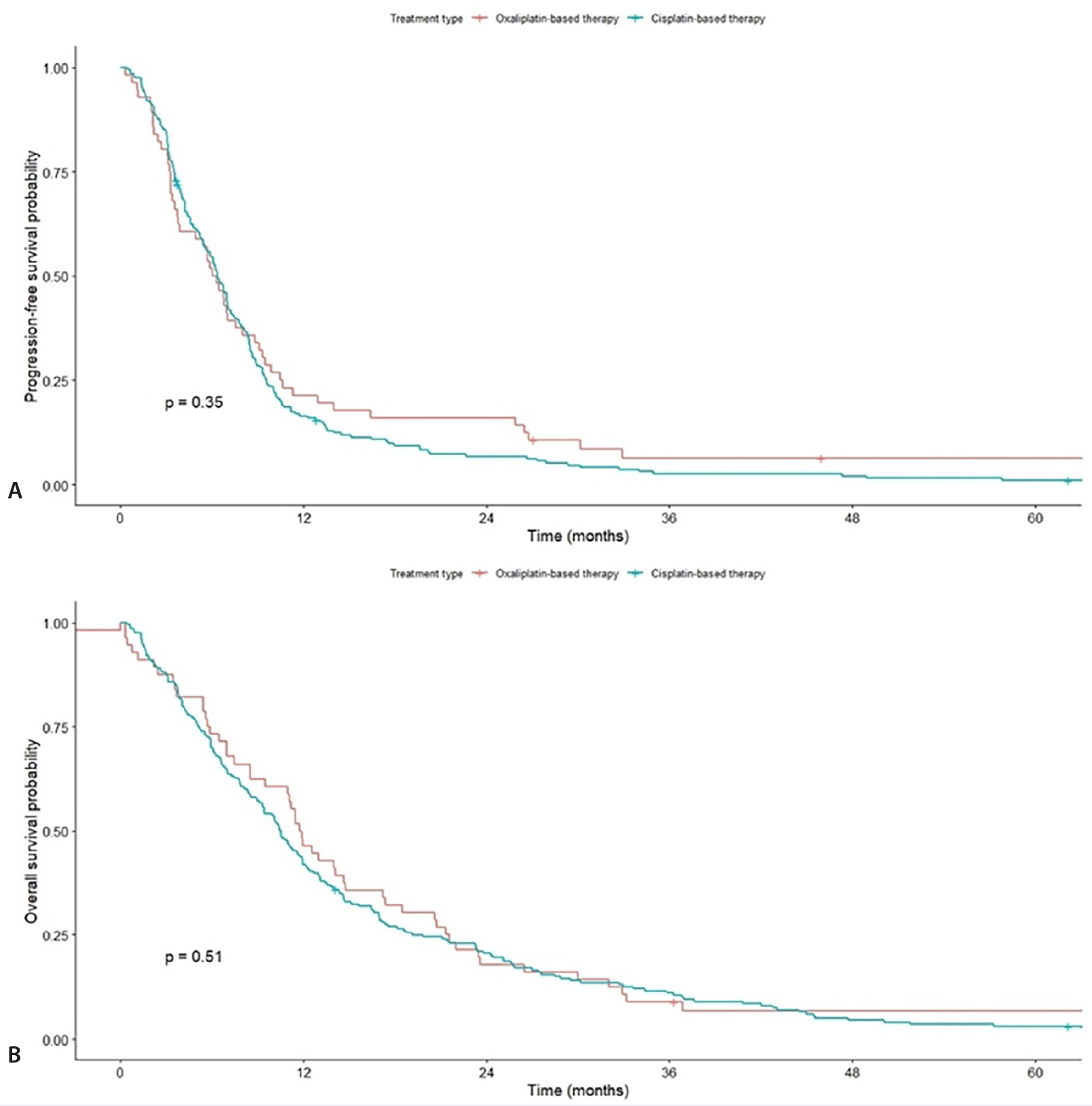
Patients receiving the doublet regimen had a median PFS of 4.90 months (95% CI: 3.77-6.43) and median OS of 9.43 months (95% CI: 7.43-12.0). No significant differences were observed between the two regimens in terms of PFS or OS (p=0.649 and p=0.480, respectively). Patients receiving cisplatin-based regimens had a median PFS of 6.33 months (95% CI: 5.53-7.07) and median OS of 10.5 months (95% CI: 9.30-12.0) ().
PFS: Progression-free survival; OS: Overall survival
Patients receiving oxaliplatin-based regimens had a median PFS of 6.15 months (95% CI: 3.87-8.80) and median OS of 11.8 months (95% CI: 9.47-17.2). No significant differences were observed between platinum-based regimens in terms of PFS or OS (p=0.345 and p=0.512, respectively).
Cox Regression Analysis Results
In univariate Cox regression, the following were significant risk factors for PFS (): ECOG PS ≥2 [hazard ratio (HR): 3.28, 95% CI: 2.22-4.84, p<0.001], signet-ring cell carcinoma (HR: 2.53, 95% CI: 1.63-3.92, p<0.001), lymph node metastasis (HR: 1.66, 95% CI: 1.20-3.21, p=0.002), bone metastasis (HR: 1.73, 95% CI: 1.24-2.43, p<0.001), and having more than two metastatic sites (HR: 1.43, 95% CI: 1.09-1.87, p=0.009).
TABLE 3. Univariate cox regression analysis results.
- | - | PFS | p | OS | p |
|---|---|---|---|---|---|
Age, years | Median (IQR) | 0.99 (0.98-1.00) | 0.272 | 0.99 (0.98-1.00) | 0.084 |
Sex | Male | - | - | - | - |
Female | 1.23 (0.95-1.62) | 0.136 | 1.18 (0.91-1.55) | 0.237 | |
Comorbidity | Yes | - | - | - | - |
No | 0.88 (0.67-1.14) | 0.322 | 0.95 (0.73-1.23) | 0.685 | |
ECOG PS | 0-1 | - | - | - | - |
≥2 | 3.28 (2.22-4.84) | <0.001 | 3.91 (2.65-5.79) | <0.001 | |
Localization | Upper | - | - | - | - |
Middle | 1.14 (0.81-1.59) | 0.450 | 1.09 (0.78-1.52) | 0.613 | |
Lower | 1.18 (0.87-1.61) | 0.293 | 1.27 (0.93-1.74) | 0.128 | |
Linitis plastica | 1.39 (0.88-2.19) | 0.159 | 1.63 (1.03-2.58) | 0.038 | |
Differentiation | Well | - | - | - | - |
Moderate | 1.49 (0.93-2.41) | 0.099 | 1.54 (0.95-2.47) | 0.078 | |
Poor | 2.00 (1.28-3.12) | 0.002 | 1.71 (1.10-2.64) | 0.017 | |
Signet-ring cell | 2.53 (1.63-3.92) | <0.001 | 2.31 (1.50-3.57) | <0.001 | |
Liver metastasis | No | - | - | - | - |
Yes | 0.89 (0.69-1.15) | 0.372 | 0.90 (0.70-1.16) | 0.424 | |
Lung metastasis | No | - | - | - | - |
Yes | 1.02 (0.74-1.39) | 0.922 | 1.02 (0.74-3.19) | 0.916 | |
Lymph node metastasis | No | - | - | - | - |
Yes | 1.66 (1.20-3.21) | 0.002 | 1.35 (0.98-1.87) | 0.064 | |
Peritoneal metastasis | No | - | - | - | - |
Yes | 1.28 (1.00-1.65) | 0.050 | 1.40 (1.09-1.80) | 0.008 | |
Bone metastasis | No | - | - | - | - |
Yes | 1.73 (1.24-2.43) | 0.001 | 1.90 (1.36-2.66) | <0.001 | |
Metastatic sites number | ≤2 | - | - | - | - |
>2 | 1.43 (1.09-1.87) | 0.009 | 1.43 (1.10-1.87) | 0.008 | |
Treatment type | Doublet regimen | - | - | - | - |
Triplet regimen | 0.93 (0.70-1.23) | 0.626 | 0.90 (0.68-1.20) | 0.455 | |
Platinum type | Cisplatin | - | - | - | - |
Oxaliplatin | 0.85 (0.62-1.15) | 0.292 | 0.88 (0.65-1.20) | 0.437 |
ECOG PS: Eastern Cooperative Oncology Group Performance Status; PFS: Progression-free survival; OS: Overall survival; IQR: Interquartile range.
Significant risk factors for OS included ECOG PS ≥2 (HR: 3.91, 95% CI: 2.65-5.79, p<0.001), linitis plastica (HR: 1.63, 95% CI: 1.03-2.58, p=0.038), poor differentiation (HR: 1.71, 95% CI: 1.10-2.64, p=0.017), signet-ring cell carcinoma (HR: 2.31, 95% CI: 1.50-3.57, p<0.001), peritoneal metastasis (HR: 1.40, 95% CI: 1.09-1.80, p=0.008), bone metastasis (HR: 1.90, 95% CI: 1.36-2.66, p<0.001), and having more than two metastatic sites (HR: 1.43, 95% CI: 1.10-1.87, p=0.008). Neither choice of regimen (doublet vs. triplet) nor platinum type (oxaliplatin vs. cisplatin) had a significant effect on PFS or OS in univariate analysis.
Multivariate Cox regression analysis was performed to adjust for baseline characteristic differences and other potential confounding factors (). Oxaliplatin use was significantly associated with a reduced risk of progression (HR: 0.68, 95% CI: 0.48-0.95, p=0.025). The use of the triplet regimen did not significantly reduce the risk for PFS (HR: 0.80, 95% CI: 0.58-1.12, p=0.195). Additionally, ECOG performance status ≥2 (HR: 2.79, 95% CI: 1.84-4.21, p<0.001), poorly differentiated tumours (HR: 1.92, 95% CI: 1.20-3.09, p=0.007), and signet-ring cell carcinoma (HR: 2.29, 95% CI: 1.44-3.64, p<0.001) were significant risk factors for PFS. For OS, ECOG performance status ≥2 (HR: 3.73, 95% CI: 2.42-5.75, p<0.001), signet-ring cell carcinoma (HR: 1.96, 95% CI: 1.24-3.09, p=0.004), peritoneal metastasis (HR: 1.51, 95% CI: 1.09-2.09, p=0.012), and bone metastasis (HR: 1.55, 95% CI: 1.00-2.39, p=0.049) were significant risk factors. Neither triplet regimen (HR: 0.74, 95% CI: 0.52-1.04, p=0.079) nor oxaliplatin use (HR: 0.74, 95% CI: 0.54-1.07, p=0.080) significantly reduced the risk of mortality.
TABLE 4. Multivariate cox regression analysis results.
- | - | PFS | p | OS | p |
|---|---|---|---|---|---|
Age, years | Median (IQR) | 1.00 (0.99-1.02) | 0.716 | 0.99 (0.98-1.01) | 0.282 |
Sex | Male | - | - | - | - |
Female | 1.07 (0.80-1.44) | 0.651 | 0.92 (0.68-1.23) | 0.575 | |
Comorbidity | Yes | - | - | - | - |
No | 0.92 (0.69-1.24) | 0.597 | 1.06 (0.78-1.44) | 0.704 | |
ECOG PS | 0-1 | - | - | - | - |
≥2 | 2.79 (1.84-4.21) | <0.001 | 3.73 (2.42-5.75) | <0.001 | |
Localization | Upper | - | - | - | - |
Middle | 1.04 (0.74-1.47) | 0.813 | 0.97 (0.68-1.37) | 0.850 | |
Lower | 0.94 (0.68-1.31) | 0.720 | 1.13 (0.81-1.57) | 0.470 | |
Linitis plastica | 0.97 (0.59-1.59) | 0.890 | 1.08 (0.65-1.80) | 0.758 | |
Differentiation | Well | - | - | - | - |
Moderate | 1.64 (1.01-2.69) | 0.048 | 1.52 (0.94-2.38) | 0.069 | |
Poor | 1.92 (1.20-3.09) | 0.007 | 1.53 (0.97-2.43) | 0.068 | |
Signet-ring cell | 2.29 (1.44-3.64) | <0.001 | 1.96 (1.24-3.09 | 0.004 | |
Liver metastasis | No | - | - | - | - |
Yes | 0.98 (0.72-1.32) | 0.876 | 1.18 (0.85-1.65) | 0.320 | |
Lymph node metastasis | No | - | - | - | - |
Yes | 1.39 (0.97-1.99) | 0.076 | 1.11 (0.78-1.58) | 0.557 | |
Peritoneal metastasis | No | - | - | - | - |
Yes | 1.25 (0.90-1.72) | 0.180 | 1.51 (1.09-2.09) | 0.012 | |
Bone metastasis | No | - | - | - | - |
Yes | 1.29 (0.83-1.99) | 0.258 | 1.55 (1.00-2.39) | 0.049 | |
Metastatic sites number | ≤2 | - | - | - | - |
>2 | 1.09 (0.75-1.58) | 0.643 | 1.03 (0.72-1.49) | 0.858 | |
Treatment type | Doublet regimen | - | - | - | - |
Triplet regimen | 0.80 (0.58-1.12) | 0.195 | 0.74 (0.52-1.04) | 0.079 | |
Platinum type | Cisplatin | - | - | - | - |
Oxaliplatin | 0.68 (0.48-0.95) | 0.025 | 0.74 (0.52-1.04) | 0.080 |
ECOG PS, Eastern Cooperative Oncology Group Performance Status; PFS: Progression-free survival; IQR: Interquartile range; OS: Overall survival. Multivariate model p-value: p<0.001.
Subgroup Analysis
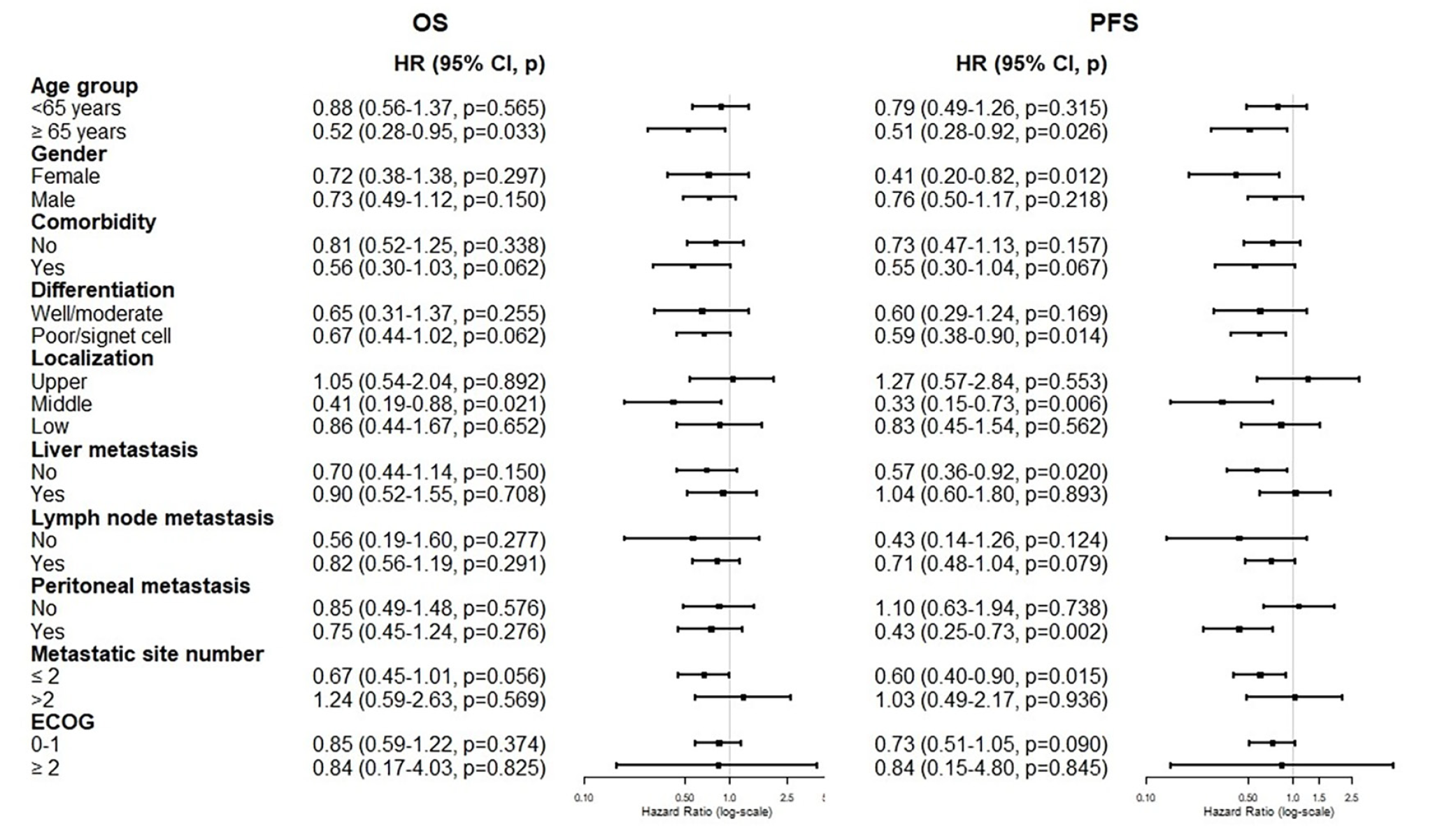
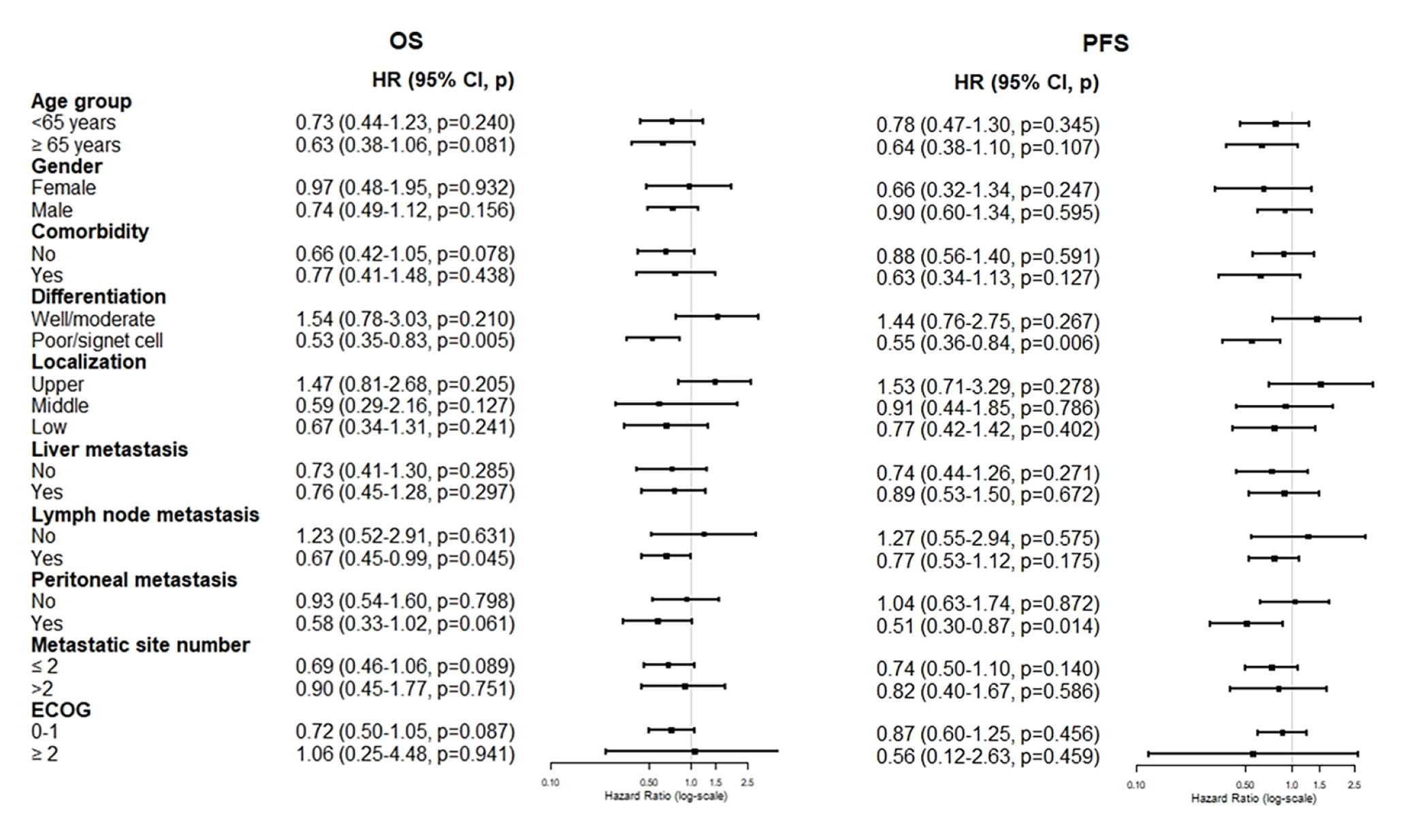
To conduct a more detailed evaluation of the relationship between treatment type and both PFS, and OS, multivariate Cox regression analyses were performed in specific subgroups. illustrates the effect of oxaliplatin-based treatment, while shows the effect of triplet therapy.
PFS: Progression-free survival; OS: Overall survival; HR: Hazard ratio; CI: Confidence interval; ECOG: Eastern Cooperative Oncology Group
PFS: Progression-free survival; OS: Overall survival; HR: Hazard ratio; CI: Confidence interval; ECOG: Eastern Cooperative Oncology Group
Among patients receiving oxaliplatin-based regimens, a significant reduction in progression risk was observed in those aged ≥65 years (HR: 0.51, 95% CI: 0.28-0.92, p=0.026), those with poorly differentiated or signet-ring cell carcinoma (HR: 0.59, 95% CI: 0.38-0.90, p=0.014), those with tumours located in the middle portion of the stomach (HR: 0.33, 95% CI: 0.15-0.73, p=0.006), those without liver metastasis (HR: 0.57, 95% CI: 0.36-0.92, p=0.020), and those with peritoneal metastasis (HR: 0.43, 95% CI: 0.25-0.73, p=0.002). In terms of OS, oxaliplatin-based treatment was associated with a significant reduction in mortality risk among patients aged ≥65 years (HR: 0.52, 95% CI: 0.28-0.95, p=0.033) and patients whose tumours were located in the middle portion of the stomach (HR: 0.41, 95% CI: 0.19-0.88, p=0.021).
For patients receiving triplet therapy, a significant reduction in the risk of progression was noted among those with poorly differentiated or signet-ring cell tumours (HR: 0.55, 95% CI: 0.36-0.84, p=0.016) and those with peritoneal metastasis (HR: 0.51, 95% CI: 0.30-0.87, p=0.014). Regarding OS, a notable risk reduction was detected in patients with poorly differentiated or signet-ring cell carcinoma (HR: 0.53, 95% CI: 0.35-0.83, p=0.005) and in those who had lymph node metastasis (HR: 0.67, 95% CI: 0.45-0.99, p=0.045).
DISCUSSION
The optimal choice between triplet and doublet chemotherapy regimens as first-line treatment for metastatic HER2-negative gastric cancer has long been debated. Despite several studies, definitive evidence supporting the superiority of triplet regimens over doublet regimens remains lacking, and specific patient subgroups who might benefit more from triplet therapy have not been clearly defined. This uncertainty is further compounded by the increasing variety and complexity of chemotherapy combinations available in recent years. Current guidelines recommend platinum and fluoropyrimidine-based doublet combinations as the standard first-line regimen; however, they suggest considering the addition of anthracyclines or taxanes (triplet regimens) on an individual patient basis. Nonetheless, guidelines lack clarity regarding which patient subgroups benefit most from triplet regimens and which specific regimens offer superior outcomes. In our study, we evaluated the impact of taxane-based triplet regimens compared to doublet regimens, as well as the type of platinum agent used, on survival outcomes in patients with metastatic HER2-negative gastric cancer.
A meta-analysis by Guo et al. confirmed that triplet regimens improved OS, PFS, and objective response rate (ORR). Subgroup analyses within this meta-analysis revealed significant survival advantages primarily with fluoropyrimidine- and platinum-based combinations, while other regimens did not demonstrate similar benefits. In the phase III V325 trial conducted by Van Cutsem et al., the addition of docetaxel to cisplatin and 5-FU resulted in a 23% reduction in mortality risk but was associated with significantly increased toxicity. Similarly, the GASTFOX phase III trial demonstrated improvements in PFS, ORR, and OS with the addition of docetaxel to the FOLFOX regimen. However, another study comparing CAPOX doublet and EOX triplet regimens failed to show an additional survival benefit with the inclusion of epirubicin; moreover, the doublet regimen exhibited a superior safety profile and quality of life, favouring its use as first-line therapy. In line with the beneficial effects of taxane-based triplet regimens, a study by Babu et al., comparing epirubicin, cisplatin, 5-FU and DCF regimens in metastatic gastric cancer patients, demonstrated a significant OS advantage favouring the DCF regimen (12.5 months vs. 9.4 months, respectively). In our study, median PFS was 6.77 months for the triplet regimen and 4.90 months for the doublet regimen. Meanwhile, median OS was 11.02 months for the triplet group compared to 9.43 months for the doublet group, with no statistically significant difference observed. Although multivariate Cox regression analysis revealed numerical reductions in risk for progression (HR: 0.80, p=0.195) and mortality (HR: 0.74, p=0.079) with triplet therapy, these reductions did not reach statistical significance. Additionally, despite increased haematologic toxicity observed in patients receiving triplet therapy, the differences were not statistically significant.
However, subgroup analysis identified significant benefits from triplet regimens in patients with poorly differentiated or signet-ring cell carcinoma, reducing the risk of progression by 45% (p=0.006) and mortality by 47% (p=0.005). Similarly, patients with peritoneal metastases experienced a 49% reduction in progression risk (p=0.014) and a 42% reduction in mortality risk (p=0.061), indicating potential greater benefit in these specific subgroups. This finding might be explained by better penetration and cytotoxic effects of taxane-based therapy on peritoneal metastases and aggressive tumour histology characterised by rapid proliferation. Supporting our findings, Zhu et al. previously demonstrated that poorly differentiated histology significantly benefited from EOX compared to CAPOX in terms of OS. Peritoneal metastasis is associated with particularly poor prognosis in metastatic gastric cancer, partially due to limited chemotherapy penetration into peritoneal tumour deposits., A recent meta-analysis has indicated encouraging efficacy results with intraperitoneal paclitaxel therapy. Consistent with these findings, our study supports that taxane-based triplet therapies potentially offer survival advantages in patients with peritoneal metastases compared to doublet regimens. Future prospective studies focusing specifically on peritoneal metastasis and aggressive histology subgroups could further refine and validate these findings.
Recently, oxaliplatin-based regimens have increasingly replaced cisplatin-based therapies due to favourable toxicity profiles. Al-Batran et al. demonstrated non-inferiority of oxaliplatin compared to cisplatin, with several meta-analyses suggesting a potential efficacy advantage for oxaliplatin-based regimens, although findings across studies remain inconsistent., Gürler et al. compared mDCF and FLOT regimens, reporting similar survival outcomes but lower toxicity with the FLOT regimen. Our study found that the median PFS was 6.77 months and the median OS was 11.02 months in the oxaliplatin-based treatment groups compared to 4.90 months and 9.43 months in the cisplatin-based groups, respectively, but the differences were not statistically significant. However, Cox regression analysis indicated a statistically significant 32% reduction in progression risk (p=0.025) and a nonsignificant 26% reduction in mortality risk (p=0.081), for oxaliplatin-based treatments. No significant differences were found in haematologic toxicity between these treatment groups. Notably, subgroup analyses revealed that patients aged ≥65 years (HR: 0.52, p=0.033), patients with comorbidities (HR: 0.56, p=0.062), poorly differentiated/signet-ring cell histology (HR: 0.67, p=0.062), tumours located in the middle portion of the stomach (HR: 0.41, p=0.021), and those with ≤2 metastatic sites (HR: 0.67, p=0.056), potentially derive greater OS benefit from oxaliplatin-based therapy. Better tolerability, particularly regarding renal and haematologic toxicities, might contribute to the efficacy observed in older patients or those with comorbidities.
Study Limitations
This study has several limitations, including its retrospective and single-centre design, and relatively small patient cohort, all limiting the generalisability of our findings. Furthermore, the lack of data regarding non-haematologic toxicity, frequency of granulocyte colony-stimulating factor prophylaxis, and the limited and comprehensive comparison of toxicity profiles represent additional limitations. Additionally, potential selection bias due to the retrospective nature of the study cannot be excluded, highlighting the need for validation of these results. Significant baseline differences between treatment groups might have impacted survival analyses. However, efforts were made to mitigate these through multivariate Cox regression analyses.
CONCLUSION
In conclusion, our findings suggest that specific patient subgroups -particularly those with peritoneal metastases and poorly differentiated or signet-ring cell histology- might derive greater benefit from triplet chemotherapy regimens. Additionally, oxaliplatin-based regimens may offer superior outcomes, especially for older patients and those with specific tumour characteristics. Further large-scale studies are needed to confirm these subgroup-specific findings and optimize treatment strategies for patients with metastatic HER2-negative gastric cancer.
Footnotes
Ethics
Ethics Committee Approval: Ethical approval for the study was granted by the Institutional Ethical Review Board of Ege University Hospital (approval no. 25-3.1T/61, date: 20.03.2025).
Informed Consent: Retrospective study.
Authorship Contributions
Concept: C.A., H.Ç.Y., Design: C.A., H.Ç.Y., S.T., G.Ş., F.P.A., B.K., Data Collection or Processing: C.A., H.Ç.Y., G.Ş., Analysis or Interpretation: C.A., S.T., Literature Search: C.A., H.Ç.Y., F.P.A., B.K., Writing: C.A., B.K.
Conflict of Interest: No conflict of interest was declared by the authors.
Financial Disclosure: The authors declared that this study received no financial support.
References
Sung H, Ferlay J, Siegel RL, et al. Global cancer statistics 2020: GLOBOCAN estimates of incidence and mortality worldwide for 36 cancers in 185 countries. CA Cancer J Clin. 2021;71(3):209-249.
Luna J, Picker N, Wilke T, et al. Real-world evidence of treatment patterns and survival of metastatic gastric cancer patients in Germany. BMC Cancer. 2024;24(1):462.
Yang D, Hendifar A, Lenz C, et al. Survival of metastatic gastric cancer: Significance of age, sex and race/ethnicity. J Gastrointest Oncol. 2011;2(2):77-84.
Van Cutsem E, Sagaert X, Topal B, Haustermans K, Prenen H. Gastric cancer. Lancet. 2016;388(10060):2654-2664.
Bang YJ, Van Cutsem E, Feyereislova A, et al. Trastuzumab in combination with chemotherapy versus chemotherapy alone for treatment of HER2-positive advanced gastric or gastro-oesophageal junction cancer (ToGA): a phase 3, open-label, randomised controlled trial. Lancet. 2010;376(9742):687-697. Erratum in: Lancet. 2010;376(9749):1302.
Wu YX, Zhou XY, Wang JQ, et al. Application of immune checkpoint inhibitors in immunotherapy for gastric cancer. Immunotherapy. 2023;15(2):101-115.
Wadhwa R, Song S, Lee JS, Yao Y, Wei Q, Ajani JA. Gastric cancer-molecular and clinical dimensions. Nat Rev Clin Oncol. 2013;10(11):643-655.
Ter Veer E, Haj Mohammad N, van Valkenhoef G, et al. The efficacy and safety of first-line chemotherapy in advanced esophagogastric cancer: a network meta-analysis. J Natl Cancer Inst. 2016;108(10).
Mohammad NH, ter Veer E, Ngai L, Mali R, van Oijen MG, van Laarhoven HW. Optimal first-line chemotherapeutic treatment in patients with locally advanced or metastatic esophagogastric carcinoma: triplet versus doublet chemotherapy: a systematic literature review and meta-analysis. Cancer Metastasis Rev. 2015;34(3):429-441.
Wagner AD, Grothe W, Haerting J, Kleber G, Grothey A, Fleig WE. Chemotherapy in advanced gastric cancer: a systematic review and meta-analysis based on aggregate data. J Clin Oncol. 2006;24(18):2903-2909.
Ajani JA, Moiseyenko VM, Tjulandin S, et al. Clinical benefit with docetaxel plus fluorouracil and cisplatin compared with cisplatin and fluorouracil in a phase III trial of advanced gastric or gastroesophageal cancer adenocarcinoma: the V-325 study group. J Clin Oncol. 2007;25(22):3205-3209.
Yamada Y, Boku N, Mizusawa J, et al. Docetaxel plus cisplatin and S-1 versus cisplatin and S-1 in patients with advanced gastric cancer (JCOG1013): an open-label, phase 3, randomised controlled trial. Lancet Gastroenterol Hepatol. 2019;4(7):501-510.
Guo X, Zhao F, Ma X, et al. A comparison between triplet and doublet chemotherapy in improving the survival of patients with advanced gastric cancer: a systematic review and meta-analysis. BMC Cancer. 2019;19(1):1125.
Zhu XD, Huang MZ, Wang YS, et al. XELOX doublet regimen versus EOX triplet regimen as first-line treatment for advanced gastric cancer: an open-labeled, multicenter, randomized, prospective phase III trial (EXELOX). Cancer Commun (Lond). 2022;42(4):314-326.
Tan HL, Chia CS, Tan GHC, et al. Metastatic gastric cancer: does the site of metastasis make a difference? Asia Pac J Clin Oncol. 2019;15(1):10-17.
Lordick F, Carneiro F, Cascinu S, et al. Electronic address: clinicalguidelines@esmo.org. Gastric cancer: ESMO Clinical Practice Guideline for diagnosis, treatment and follow-up. Ann Oncol. 2022;33(10):1005-1020.
Ajani JA, D’Amico TA, Bentrem DJ, et al. Gastric cancer, version 2.2022, NCCN Clinical Practice Guidelines in Oncology. J Natl Compr Canc Netw. 2022;20(2):167-192.
Al-Batran SE, Hartmann JT, Probst S, et al. Phase III trial in metastatic gastroesophageal adenocarcinoma with fluorouracil, leucovorin plus either oxaliplatin or cisplatin: a study of the Arbeitsgemeinschaft Internistische Onkologie. J Clin Oncol. 2008;26(9):1435-1442.
Cunningham D, Starling N, Rao S, et al. Capecitabine and oxaliplatin for advanced esophagogastric cancer. N Engl J Med. 2008;358(1):36-46.
Huang J, Zhao Y, Xu Y, et al. Comparative effectiveness and safety between oxaliplatin-based and cisplatin-based therapy in advanced gastric cancer: a meta-analysis of randomized controlled trials. Oncotarget. 2016;7(23):34824-34831.
Wang G, Yang B, Fu Z, Wang X, Zhang Z. Efficacy and safety of oxaliplatin-based regimen versus cisplatin-based regimen in the treatment of gastric cancer: a meta-analysis of randomized controlled trials. Int J Clin Oncol. 2019;24(6):614-623.
Van Cutsem E, Moiseyenko VM, Tjulandin S, et al. Phase III study of docetaxel and cisplatin plus fluorouracil compared with cisplatin and fluorouracil as first-line therapy for advanced gastric cancer: a report of the V325 study group. J Clin Oncol. 2006;24(31):4991-4997.
Zaanan A, Bouche O, de la Fouchardiere C, et al. LBA77 5-fluorouracil and oxaliplatin with or without docetaxel in the first-line treatment of HER2 negative locally advanced (LA) unresectable or metastatic gastric or gastro-esophageal junction (GEJ) adenocarcinoma (GASTFOX-PRODIGE 51): a randomized phase III trial sponsored by the FFCD. Annals of Oncology. 2023;34:S1318.
Babu KG, Chaudhuri T, Lakshmaiah KC, et al. Efficacy and safety of first-line systemic chemotherapy with epirubicin, cisplatin plus 5-fluorouracil and docetaxel, cisplatin plus 5-fluorouracil regimens in locally advanced inoperable or metastatic gastric or gastroesophageal junction adenocarcinoma: a prospective phase II study from South India. Indian J Cancer. 2017;54(1):47-51.
Manzanedo I, Pereira F, Pérez-Viejo E, Serrano Á. Gastric cancer with peritoneal metastases: current status and prospects for treatment. Cancers (Basel). 2023;15(6):1777.
Chau I, Norman AR, Cunningham D, Waters JS, Oates J, Ross PJ. Multivariate prognostic factor analysis in locally advanced and metastatic esophago-gastric cancer--pooled analysis from three multicenter, randomized, controlled trials using individual patient data. J Clin Oncol. 2004;22(12):2395-2403.
Bakhtiar M, Ilerhunmwuwa NP, Ahmed R, et al. Efficacy and safety of intraperitoneal paclitaxel based regimens in patients with gastric cancer and peritoneal metastasis: a systematic review and meta-analysis. Journal of Clinical Oncology. 2025;43(4_suppl):373-373.
Gürler F, Güven DC, Aydemir E, et al. Retrospective comparison of flot and modified dcf as first-line chemotherapy in metastatic gastric adenocarcinoma. Turk J Med Sci. 2022;52(5):1559-1568.